
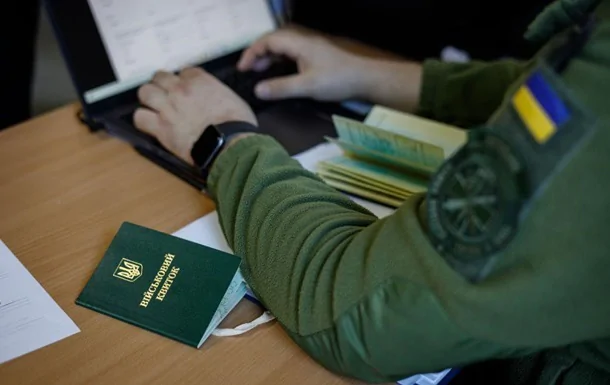
Businesses in Ukraine have long learned to operate under pressure. First, there was the pandemic, then full-scale war, and now a new wave of challenges related to the update of economic reservation rules. For many companies, this is not just a legal procedure. It is a matter of survival: how to retain key personnel without breaking the law and maintaining the workflow.
Reservation is not about privileges
Economic reservation is not designed to “save” specific people, but to preserve the functions without which the system cannot operate. If production stops, not only the owners suffer, but the entire industry — from suppliers to consumers. That is why the main logic of the process is not about names, but about evidence that without a certain role, the company will not be able to fulfill its obligations.
This is a decision about business continuity. About the ability to continue working even when everything around is changing.
New order and new responsibility
After the spring changes of 2025, the rules for filing became stricter but also more transparent. Now, businesses are required to provide not just a letter from the manager, but real evidence of criticality: contracts, financial documents, technical specifications, even employee certificates. There is now a requirement for a clear list of functions — who the company considers irreplaceable and why.
And this is not bureaucracy, but a way to bring order to the process. Because conscription is always a balance between defense and the economy. Ukraine cannot afford to “freeze” thousands of specialists just because someone considers them necessary. But it also cannot deprive the rear of professions without which the army will not receive weapons, electricity, fuel, or technology.
How companies are preparing
Today, employers approach reservations as a strategic process. They form internal commissions, create “critical job profiles,” track reservation expiration dates, and prepare document updates in advance. Some even write business continuity scenarios — “what if” — to prove to the state that this is not a formality.
The process usually looks like this: HR and lawyers prepare a report on the company, add copies of contracts, and explain how the company’s activities are related to defense or economic support. Next, they provide a list of specific people with their job descriptions. All of this is compiled into a single package and submitted to the relevant ministry or military administration.
It sounds simple, but there are many nuances in the details. For example, if you are reserving IT specialists, it is important to prove that their product or service is actually used for critical needs: cyber defense, financial infrastructure, communications, medicine. If it is manufacturing, you need to show contracts, supply volumes, and links to the defense or humanitarian sectors.
The most common mistakes
Most rejections happen because of trivial things. The documents say “the employee is important to the company,” but do not explain why. They do not provide evidence or use old templates, do not update dates, and allow inaccuracies in the data. There is another extreme case — “reserving everyone in a row” without any logic. This, on the contrary, causes distrust in the commissions and delays consideration.
Who does reservation work for?
Today, economic reservation applies to companies that perform socially important functions — from energy, transport, and communications to medicine, education, food safety, logistics, technology, and creative industries. In particular, Ukrainian IT companies are actively proving that their contribution to the digital economy and cyber security is no less important than physical infrastructure.
A separate block is production that supplies the defense sector: the supply of parts, repair of equipment, energy conservation, and materials for military needs. The criteria here are strict, but the advantages are obvious: the state is interested in the stability of such enterprises.
How businesses see it strategically
For mature companies, booking has become part of corporate culture. It is a risk management system: anticipate threats, assess consequences, and act proactively. Companies have learned not to wait for the next wave of mobilization, but to keep their documents up to date at all times. Some even create internal dashboards with reservation expiration dates so as not to lose a single day.
It’s also about reputation. Businesses that approach reservations responsibly demonstrate maturity and partnership to the state. And often it is these companies that receive not only reservations for their people, but also trust to participate in support programs, grants, and state orders.
About ethics and balance
Booking is not an escape from responsibility. It is another form of it. While one part of the country holds the front line with weapons, another holds it with work. And this work is no less important.
_________________________________________________________________________
This is the essence of economic reservations in 2025. Not in formalities, not in lists, but in the shared responsibility of business and the state for continuity, stability, and trust. Because today, the front line is not only a line of trenches, but also every workshop, every server, and every team that works.